
Table of Contents
7 Proven Ways to Boost Marine Employee Success
Within the commercial marine industry, maintaining operational excellence depends on the skills, safety, and morale of crew members. As fleets expand and global maritime operations grow more complex, boosting commercial marine employee success has become a central priority for owners and managers. From crew retention to safety protocols and professional development, small adjustments can produce measurable results in performance, efficiency, and compliance. The strategies explored here provide practical, evidence-based ways to achieve these results and strengthen both business performance and seafarer well-being.
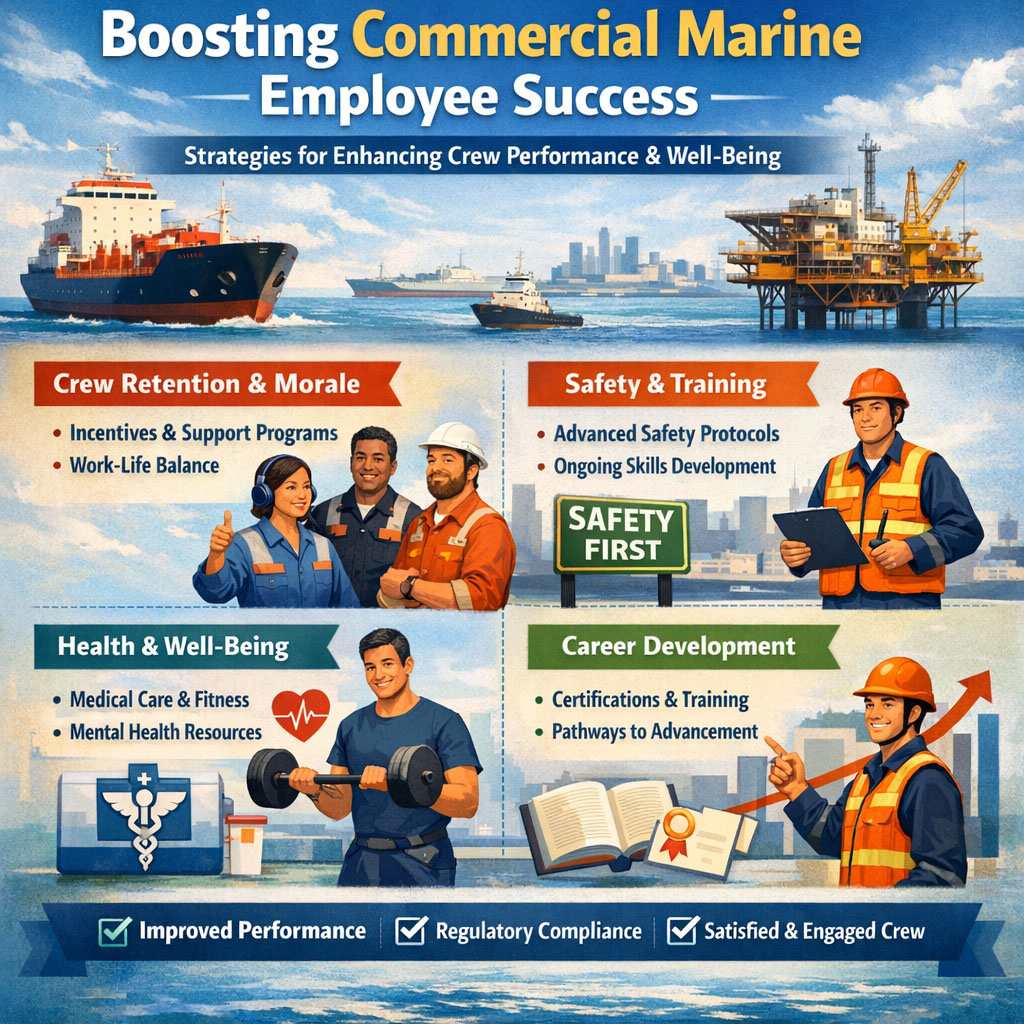
For organizations recruiting or managing marine professionals, strategic workforce management is as vital as vessel maintenance. A well-trained, motivated crew can reduce downtime, enhance safety ratings, and drive profit margins upward. Whether using recruitment platforms like Marine Zone’s job listings or improving onboard educational programs, today’s marine leaders must take a holistic approach. This article explores seven proven approaches that contribute to commercial marine employee success, covering everything from skill optimization and technology adoption to leadership, safety culture, and retention strategies.
Understanding the technical, psychological, and logistical challenges that marine employees face is crucial. The global marine market now demands high adaptability, advanced technical expertise, and compliance with international regulations. By applying these seven proven methods, marine companies can create sustainable systems that empower crews and propel operations to higher levels of effectiveness.
Understanding Challenges in Commercial Marine Employee Success
The commercial maritime sector is one of the most demanding industries in terms of physical endurance, technical precision, and mental resilience. Employees often work long shifts in unpredictable weather, operating heavy equipment and navigating complex logistics. As a result, fatigue management, safety compliance, and task coordination play critical roles in daily operations. Without adequate crew support and structured training, performance drops, and risks increase — highlighting the need for precise workforce management. According to the International Maritime Organization (IMO), fatigue remains one of the top underlying causes of maritime accidents (source), underscoring the urgency of structured crew welfare programs.
Another challenge lies in professional competence and regulatory compliance. Today’s crews must stay updated on international standards such as SOLAS (Safety of Life at Sea) and MARPOL (Marine Pollution). Compliance not only prevents costly penalties but reinforces operational integrity and environmental sustainability. Employers who invest in continuous training—whether through onboard workshops or advanced simulation—see higher retention and better safety outcomes. Job-matching services like the Marine Zone Employer Directory can connect owners with certified professionals ready to meet these regulatory obligations, shaving off recruitment time and improving employment alignment.
Lastly, communication barriers and cultural diversity affect many crew environments. Commercial shipping enterprises often employ multinational crews, each bringing different approaches to teamwork and authority structures. Building effective communication systems, fair conflict resolution methods, and cross-cultural awareness programs enhances operational cohesion. Many successful operators now rely on mixed-language onboard communication protocols and standardized safety handbooks to bridge potential misunderstandings. Recognizing and addressing these challenges forms the foundation for implementing the seven strategies that drive marine employee success.
Proven Strategies to Boost Commercial Marine Employee Performance
1. Implement Structured Onboard Training and Mentorship.
Continuous learning is essential in marine environments, where technology and regulations evolve rapidly. Routine onboard training should integrate navigation system updates, environmental protocols, and emergency response drills. Mentorship, anchored by senior officers guiding new recruits, fosters a balanced knowledge transfer that builds competence faster. By standardizing instruction methods, shipowners ensure every employee maintains a consistent level of technical readiness—vital for international operations and audits.
2. Strengthen Safety Culture and Psychological Well-being.
A robust safety management system (SMS) anchored in proactive reporting, peer accountability, and scenario-based drills can drastically reduce incidents. Safety must move from “reactive” to “predictive,” meaning crews anticipate hazards and respond with prepared protocols. Additionally, with extended periods away from family, emotional well-being plays a key role in sustaining peak performance. Onboard wellness programs, mental health check-ins, and access to counseling through satellite communication systems are modern solutions that leading ship management firms now prioritize. Organizations like the International Labour Organization (ILO) have introduced welfare guidelines for seafarers (source) that are shaping best practices globally.
3. Utilize Technology and Data Analytics for Crew Efficiency.
Digital transformation in maritime operations allows for comprehensive performance monitoring. Smart sensors, workforce analytics, and electronic logbooks provide real-time insights into task completion, energy consumption, and route optimization. These tools not only help in reducing fuel use but also reveal patterns in employee workload management. Implementing Fleet Management Systems (FMS) with AI integration assists captains and HR teams in making data-backed decisions on crew rotation and training priorities. Combining technology with human expertise yields a safer, more efficient workforce that aligns with international competitiveness.
4. Empower Leadership and Decision-Making Skills.
Strong leadership, both at sea and onshore, remains one of the defining success factors in the maritime industry. Officers and supervisors who demonstrate clarity, empathy, and technical depth foster trust among crew members. Leadership training should include simulation-based decision-making exercises and case studies derived from past incidents. By encouraging decentralized decision-making, employers empower officers to act swiftly during emergencies—a capability invaluable in storm navigation or mechanical failures. Leadership growth directly translates to better morale, lower turnover, and higher productivity across fleet operations.
5. Build Clear Career Progression and Reward Structures.
Retention in the commercial marine workforce depends heavily on visible advancement pathways and fair compensation metrics. When employees can map their careers—from cadet to chief officer or from deckhand to superintendent—they commit longer to the company’s vision. Incentives tied to skill acquisition, safety performance, and innovation motivate continuous improvement. Employers can also utilize recruitment and reward systems featured on Marine Zone to standardize recognition and career posting across fleets. When progression is transparent, turnover decreases, and talent attraction improves—a proven success lever in competitive maritime markets.
Turning Insights into Lasting Success at Sea
Embedding these strategies requires an organization-wide commitment, starting from top management down to deck-level supervisors. Policy documents and training manuals must reflect this commitment, clearly outlining performance expectations and safety standards. Real-time feedback loops allow crews to assess their progression, creating a culture of continuous improvement. Periodic audits by classification societies or management consultants ensure compliance and identify new areas for honing employee skills and morale. Implementation isn’t a one-time task; it’s an evolving process adjusting with each voyage and regulatory enhancement.
The ability to sustain crew excellence also depends on strong collaboration between maritime recruiters, employers, and training institutions. Partnering with professional directories such as Marine Zone’s employer database provides a streamlined approach to sourcing and developing skilled professionals. Companies can simultaneously align their corporate values with viable human resource development frameworks. When administrative and operational sides of the business work cohesively, every project—from offshore drilling support to commercial cargo—benefits from consistent execution and lower risk exposure.
Future success for commercial marine employees lies in combining technology, learning culture, and human-centric leadership. The industry’s continued modernization should never overlook the men and women working aboard vessels who enable this global trade ecosystem. By practicing transparency, enforcing continuous training, and nurturing well-being, maritime organizations transform these seven proven methods into long-term operational standards. Each strategy reinforces the other, creating resilient crews who adapt quickly, perform safely, and represent the best of the maritime profession.
Boosting commercial marine employee success isn’t just about raising short-term productivity—it’s a transformative investment in the future stability and competitiveness of the industry. As fleets navigate environmental changes and global trade pressures, strong, empowered crews remain the backbone of every operation. Through structured training, leadership empowerment, wellness support, and smart use of technology, maritime companies can ensure sustainable growth and excellence at every tier of their workforce. By applying these seven proven strategies, the commercial marine sector can continue evolving with stronger teams, safer vessels, and a thriving global workforce.